About Us
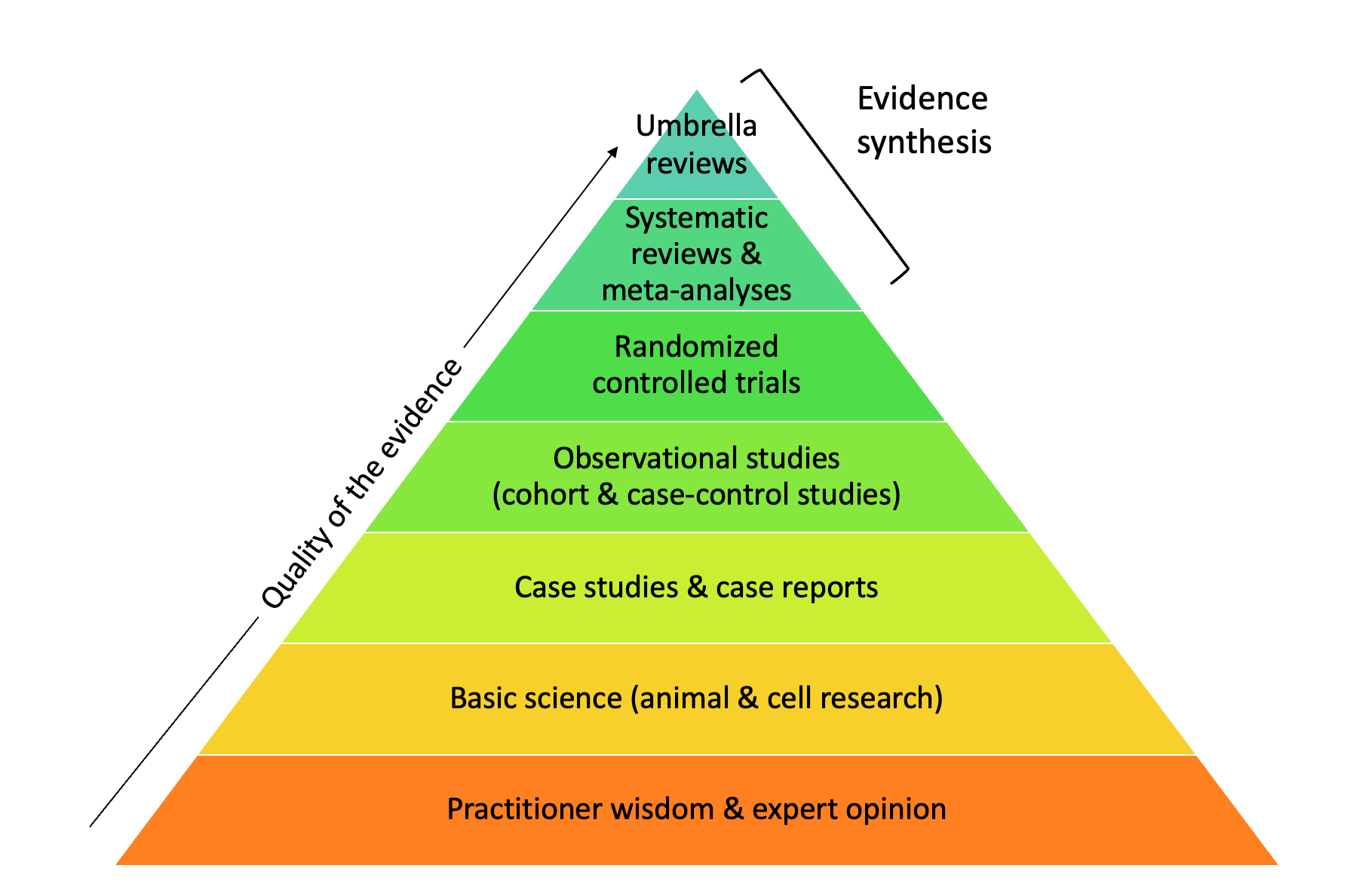
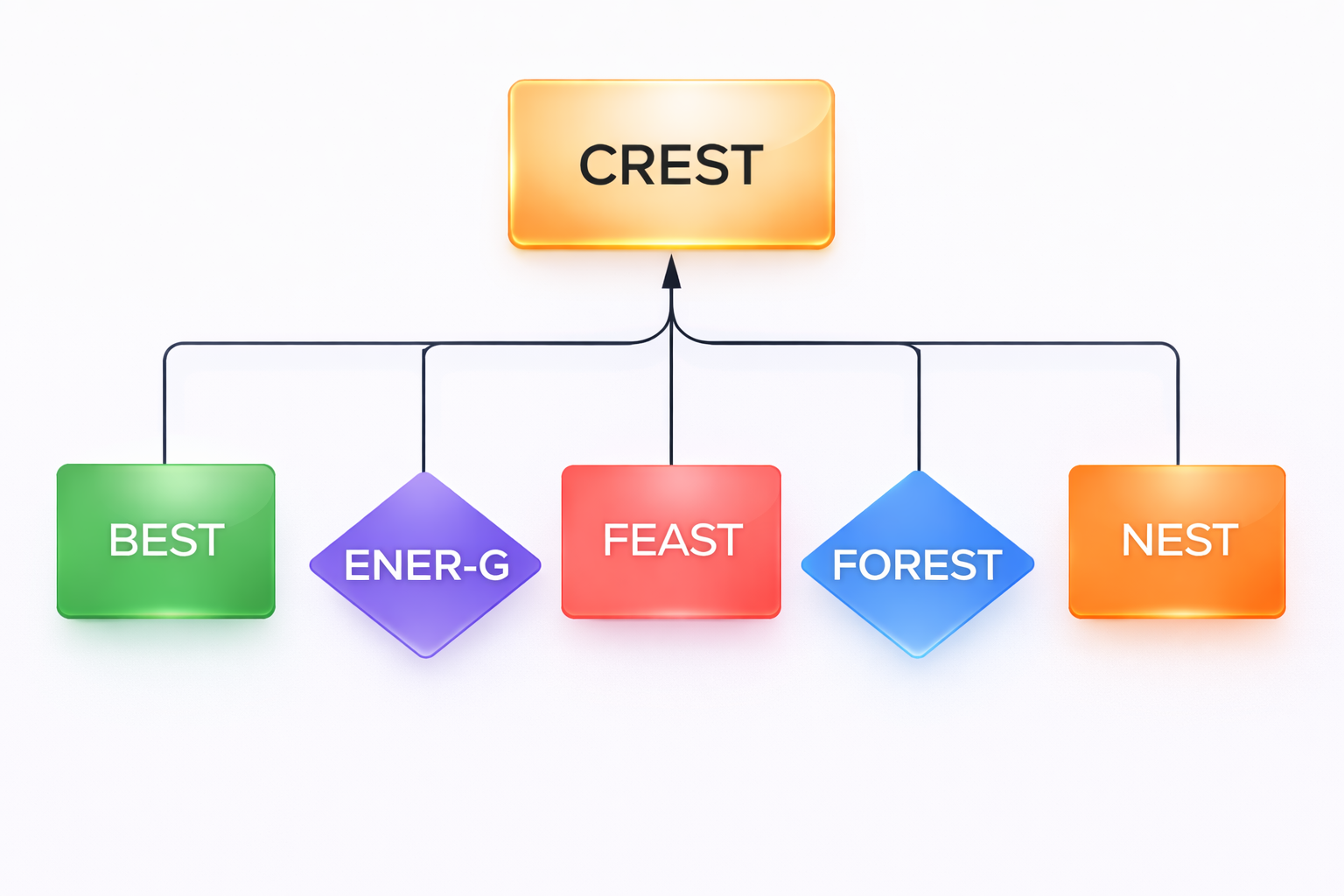
CREST is a training program for graduate students, clinicians, and researchers in the medical, integrative health, health science, and public health fields. We offer training in research methods in evidence synthesis, a type of research which aims to find and summarize all the studies that exist on a certain topic. Examples of evidence synthesis include:
A systematic review is a type of study where researchers carefully collect and analyze all the existing research on a specific question. Instead of running a new experiment, we look at many past studies, use clear rules to decide which ones to include, and summarize what the total body of evidence shows. These reviews are often used to help create clinical practice guidelines and to inform health insurance coverage and healthcare policy decisions, because they provide the most reliable summary of what treatments work and how strong the evidence is.
Systematic reviews often contain a meta-analysis, which uses statistics to combine the results from many similar studies into one overall mathematical result. By pooling data from multiple studies, it gives a clearer and more precise estimate of how well a treatment works, or how and when a condition or disease occurs.
A scoping review is a type of review used to map out what research exists on a topic and identify key concepts, gaps, and types of evidence. Instead of answering one narrow question, it helps researchers understand how much evidence is available and where more research is needed. Scoping reviews are often used to guide future research, shape research priorities, and inform early discussions in policy and guideline development.
An umbrella review is a review of reviews, meaning it brings together results from many systematic reviews and meta-analyses on a broad topic. This helps provide a big-picture summary of what is known across multiple conditions or interventions. Umbrella reviews are especially useful for decision-makers, guideline panels, and policymakers because they summarize large bodies of evidence in one place.
CREST has multiple tracks which focus on different content areas, including brain injury (concussion), nutrition, endocrinology (hormones), and psychiatry.
Behavioral Health Evidence Synthesis Training (BEST): The Behavioral Health Evidence Synthesis Training (BEST) program is a research education initiative designed to improve the quality and rigor of systematic reviews in behavioral health and complementary and integrative health (CIH). The program responds to a critical need for methodological training in high-quality systematic reviews and meta-analyses, particularly for complex, multicomponent interventions central to whole-person health. Behavioral health and CIH interventions—including mindfulness, yoga, and other mind-body therapies—are increasingly used to address chronic disease and mental health challenges. However, systematic reviews in these fields frequently suffer from poor methodological quality, limiting their utility in guiding evidence-based practice. The BEST program addresses this gap by offering scalable, virtual, short-course training in Cochrane-level systematic review and meta-analysis methodology, with a special focus on existing and emerging artificial intelligence (AI) tools. BEST combines asynchronous and synchronous learning formats with an optional mentored research component, enabling participants to engage in hands-on systematic reviews and contribute to publishable scientific outputs. The program emphasizes interdisciplinary collaboration and stakeholder engagement, including lived experience consultants to ensure real-world relevance. Expert instruction and structured mentorship is provided by a multidisciplinary faculty with expertise in behavioral health, systematic reviews, AI, and CIH. Through this model, the BEST program will train a new generation of clinician-researchers equipped to generate high-quality evidence on behavioral health and CIH interventions.
Evidence-based Nutrition Education & Research Guidance (ENER-G; R25-DK130848): Funded in 2023, Evidence-based Nutrition Education and Research Guidance (ENER-G) addresses the pressing need for nutrition-focused, methodologically sound, Evidence-Based Nutrition (EBN) skills training across the field of nutrition including the clinical interface. ENER-G provides a 5-year program with comprehensive workshops, seminars, courses, and mentored research experiences featuring prominent instructors in research methodology and pedagogy. We’ve assembled a strong leadership team located on the East Coast, West Coast, and in the South, with a distinct portfolio of research, teaching, and administrative skills to collaborate on this initiative. Our overall objective is to implement, evaluate, and disseminate skills-based rigorous, nutrition-focused, EBN training and research experiences across both a conventional and integrative nutritional science curriculum.
Food, Emotion, & Affect Synthesis Training (FEAST): Nutritional psychiatry is an emerging field, exploring the relationship between diet patterns and mental health outcomes. There is vast observational research showing a consistent relationship between poorer diet quality and worse mental health outcomes. Less is known about the individual foods and nutrients that exert protective or harmful effects or the mechanism by which they impact mental health outcomes. Additionally, the last decade has seen the emergence of experimental studies assessing the impact of dietary modification on mental health outcomes. The FEAST track of the CREST center conducts systematic reviews, meta-analyses, and scoping reviews to synthesize the available evidence on nutritional psychiatry topics.
Forensic Evidence Synthesis Training (FOREST): High-quality systematic reviews and evidence synthesis are critically needed in forensic science to ensure that forensic methods, interpretations, and expert testimony are grounded in transparent, reproducible, and empirically validated evidence. Numerous evaluations have documented that many commonly used forensic disciplines have historically lacked robust foundational validity, standardized performance metrics, and rigorous error-rate estimation, contributing to uncertainty in reliability and potential miscarriages of justice. Strengthening evidence synthesis capacity within forensic science is essential for informing courts, policymakers, and practitioners with defensible, transparent assessments of evidentiary strength that align forensic practice with broader standards of evidence-based decision-making.
Neurotrauma Evidence Synthesis Training (NEST): The Neurotrauma Evidence Synthesis Training (NEST) program is a traumatic brain injury (TBI) focused, mentored evidence synthesis training initiative that prepares and supports a cohort of trainees to conduct rigorous evidence synthesis projects from inception through publication, including systematic reviews, meta-analyses, scoping reviews, and umbrella reviews, with a particular emphasis on post-acute sequelae of TBI and long term outcomes.
The NEST center is supported by the National Center for Complementary & Integrative Health of the National Institutes of Health under Award Number U24AT012549 through the RAND REACH Center. The content is solely the responsibility of the authors and does not necessarily represent the official views of the National Institutes of Health. This project also received support from a RAND REACH Center pilot grant funded by the NCMIC foundation.